DriveWell Design system
Building a scalable design system to support a multi-brand mobile platform and accelerate product development
Role: Lead Product Designer
Focus: Design systems, design tokens, multi-brand theming, tooling
Enabled scalable theming across 40+ branded apps
Reduced design and development overhead through reusable patterns
Established a shared system used across multiple product teams
Problem
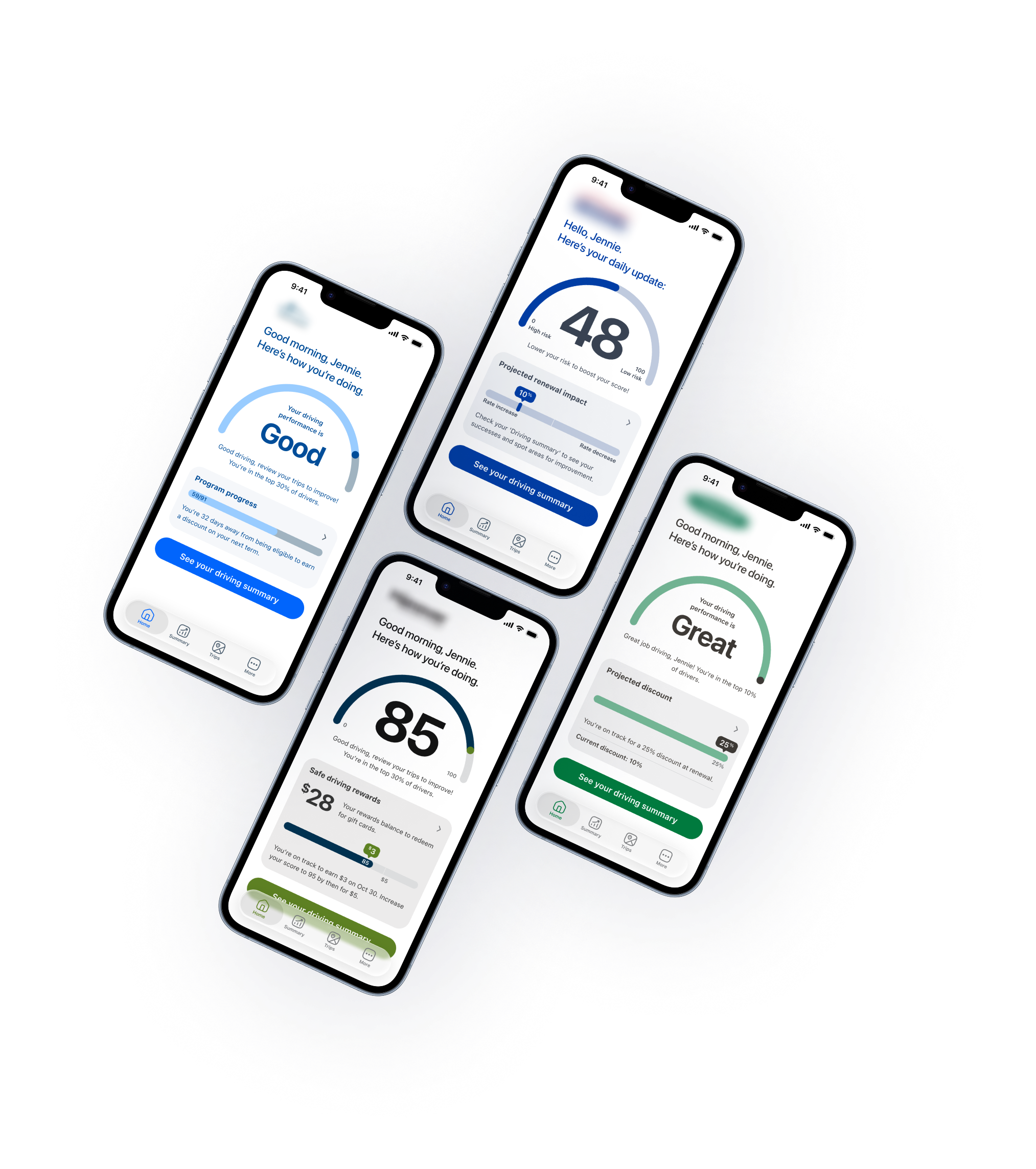
DriveWell Advance is a shared mobile platform used by insurers to deliver usage-based insurance apps across multiple brands.
Before the design system, branding and UI implementation were heavily manual, with no shared structure between design and development.
Visual decisions such as colors and typography were often hardcoded directly into code, making updates slow, inconsistent, and difficult to scale.
Where it broke
No shared source of truth between design and engineering
UI values were hardcoded, making updates time-consuming and error-prone
Each new brand required significant manual UI customization
Design and shipped product frequently diverged
Why it mattered
Feature delivery was slow and difficult to scale
Inconsistencies increased as more teams contributed to the product
Branding flexibility for customers was limited
Supporting multiple brands became inefficient and error-prone
Approach
The problem wasn’t just inconsistency. It was the absence of a scalable system.
I introduced a token-based design system as a foundational layer of the DriveWell Advance platform, creating a shared, structured approach across design and engineering.
This included:
defining a token architecture for visual decisions
integrating tooling to connect design directly to code
establishing workflows to support multi-brand theming
Key Decisions
To enable scalability across teams and products, I focused on a few key decisions that established a structured and repeatable system.
Using design tokens as the foundation
Rather than defining visual values directly in components, I abstracted all visual decisions into tokens.
Tokens allow color, typography, spacing, and other values to be defined once and reused consistently across the system.
Result: A single source of truth that ensures consistency across design and engineering.
Designing for multi-brand theming
The system needed to support many branded apps, each with unique visual requirements.
I structured tokens to support brand-level overrides and flexible theming.
Result: New brands can be implemented without reworking UI, and visual customization scales efficiently.
Connecting design directly to code
To reduce gaps between design and development, I implemented a workflow that syncs tokens from Figma to GitHub.
Using Tokens Studio and Style Dictionary, tokens are transformed into platform-specific code for iOS and Android.
Result: What is designed in Figma is reflected more accurately in the shipped product.
Standardizing workflows across teams
Multiple product teams were contributing to the same platform, leading to inconsistencies.
I documented workflows and created a structured system that teams could follow when designing and implementing features.
Result: Improved consistency and a shared foundation across teams.
What I built
A system that connects design, tokens, and code into a single scalable workflow:
Design → Tokens → Code → Product

Token-Based System
~75 color tokens per brand with structured taxonomy
JSON-based token architecture
Multi-brand token files supporting scalable theming
Tooling & integration
Tokens Studio integration in Figma
Automated sync from Figma to GitHub
Style Dictionary pipeline for iOS and Android
Component library
Designed and maintained reusable UI components
Built flexible components that support multiple product use cases
Enabled teams to design and build faster using shared patterns
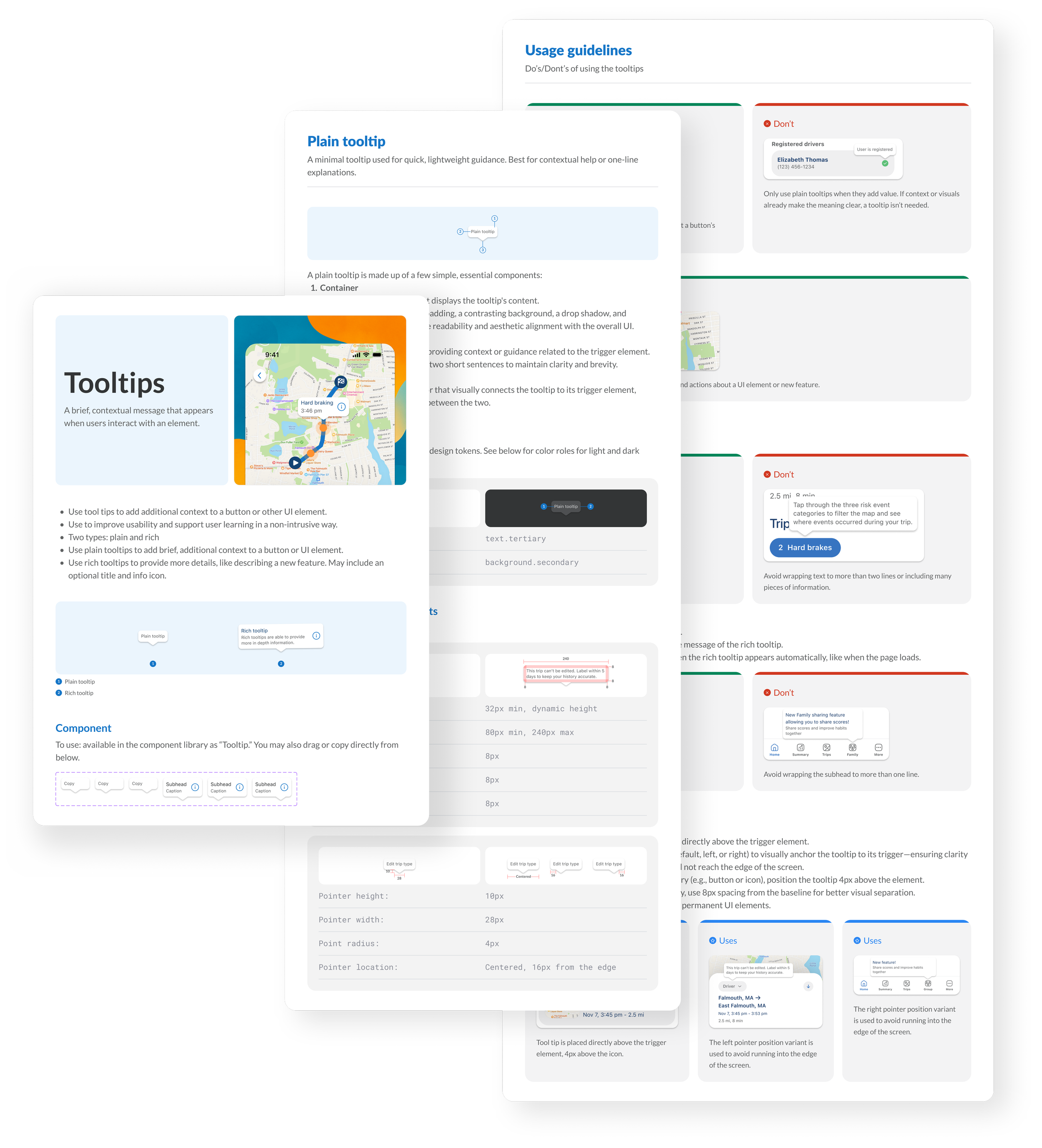
Components are paired with documentation and usage guidelines, enabling teams to consistently design and implement features using shared patterns.Documentation & adoption
Created onboarding and workflow documentation
Defined processes for setting up new branded apps
Supported adoption across 4+ product teams
Impact
Scaled product development across brands
Enabled a single system to support 40+ branded apps, allowing features to be reused instead of rebuilt.
Significant reduction in development effort
Internal estimates suggest a ~50–60% reduction in development effort for white-label app setup through the use of tokens.
Reduced delivery overhead (structural)
Shifted from manual, per-brand customization to a shared system, lowering the cost and effort required to deliver new branded apps.
Adopted across teams
Established a shared system used by 4+ product teams, improving consistency across the product
Unlocked new capabilities
Enabled features like dark mode and localization that were previously not feasible within the old framework.